Herbal Infusions for Bath and Body Rituals
1 Comment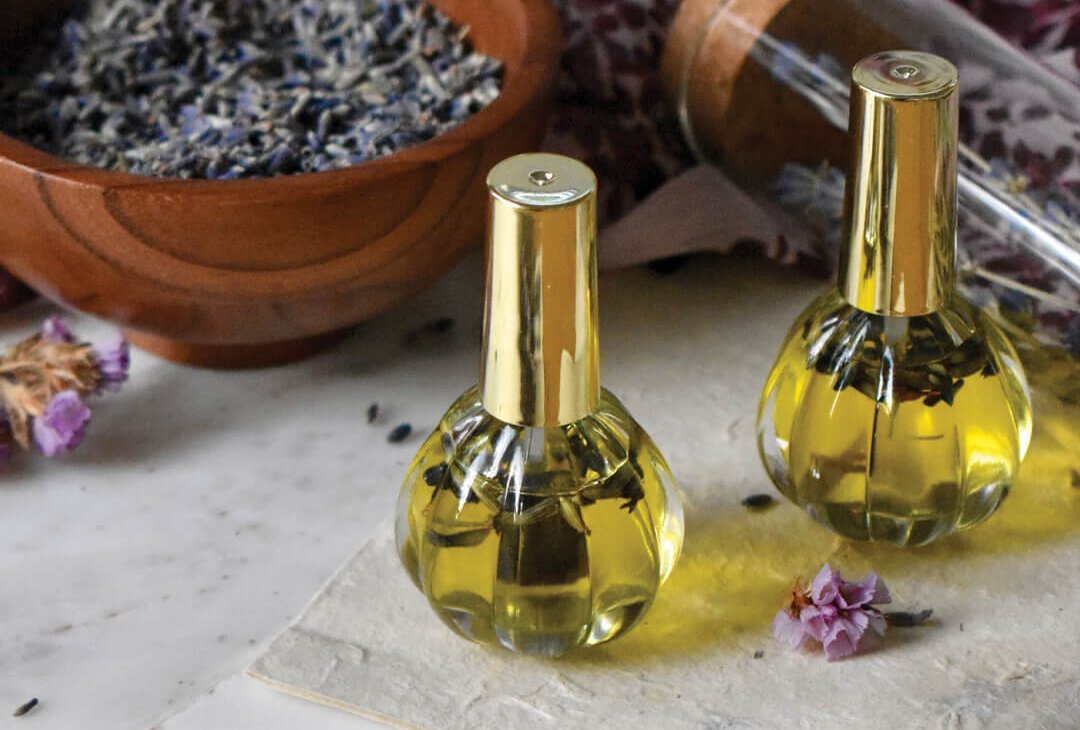

Photo Credit: Kami McBride
Herbal infusion is one of the most rewarding ways to bring plants into bath and body care. It asks for patience more than skill. All you need is a jar, a handful of dried herbs, and a carrier oil. The process is simple, almost meditative, yet the results are deeply nourishing.
Understanding Herbal Infusion
At its simplest, an herbal infusion is a way of carrying the character and beneficial qualities of a plant into oil. Dried herbs are submerged in a carrier oil and left to rest, allowing the oil to absorb fat-soluble compounds. Herbal-infused oils are used topically to treat a variety of conditions, from inflammation to dry skin, depending on the herb. They also serve as the foundation for lotions, creams, bath oils, body balms, and many more.
Choosing Your Herbs
Each plant carries distinct qualities, both aromatic and functional. Lavender lends a gentle, familiar floral note and a soothing calm, while rosemary awakens the senses with its bright aroma. Start with your intention. Are you seeking calm, comfort, or invigoration?
Daniela Rey, a Colombian herbalist and teacher, shared with us her favorite herbal options in Willow and Sage Winter 2025:
- • “Calendula Flowers: These beautiful yellow flowers are hardy and full of antioxidants. Calendula is soothing to the skin and supports the immune system.
- • Nettles: A wise and deeply nutritive weed, nettles are packed with vitamins, minerals, and enzymes.
- • Yarrow: This herb is a great ally for women’s health. It is a wise balancing herb that supports healthy menstruation, hormone balance, and skin health.
- • Mint: This one is a great cooling herb for summer that supports healthy digestion.”
Dried herbs are generally preferred for infusions, especially in oil, as properly dried herbs reduce the risk of spoilage. Sourcing matters as well. Herbs should be vibrant and fragrant when handled.

How to Make Herbal Infused Oils
There are two primary methods for infusing oil: slow and gentle heat. The slow method remains the most traditional and, for many, the most satisfying.
To begin, fill a clean, completely dry glass jar with dried herbs halfway. Pour in your chosen carrier oil until the plant material is fully submerged. Olive oil is a common starting point, as it is relatively stable, widely available, and neutral enough to allow the herb’s character to come forward. Use a chopstick or the handle of a wooden spoon to release any trapped air bubbles, ensuring the herbs remain fully covered to prevent spoilage. Seal the jar and place it in a warm, shaded area for three to four weeks, shaking gently every few days.
Over time, the oil will change in color and scent. When the infusion feels complete, strain through cheesecloth into a clean jar, pressing lightly to extract as much oil as possible. Label with the herb and date.
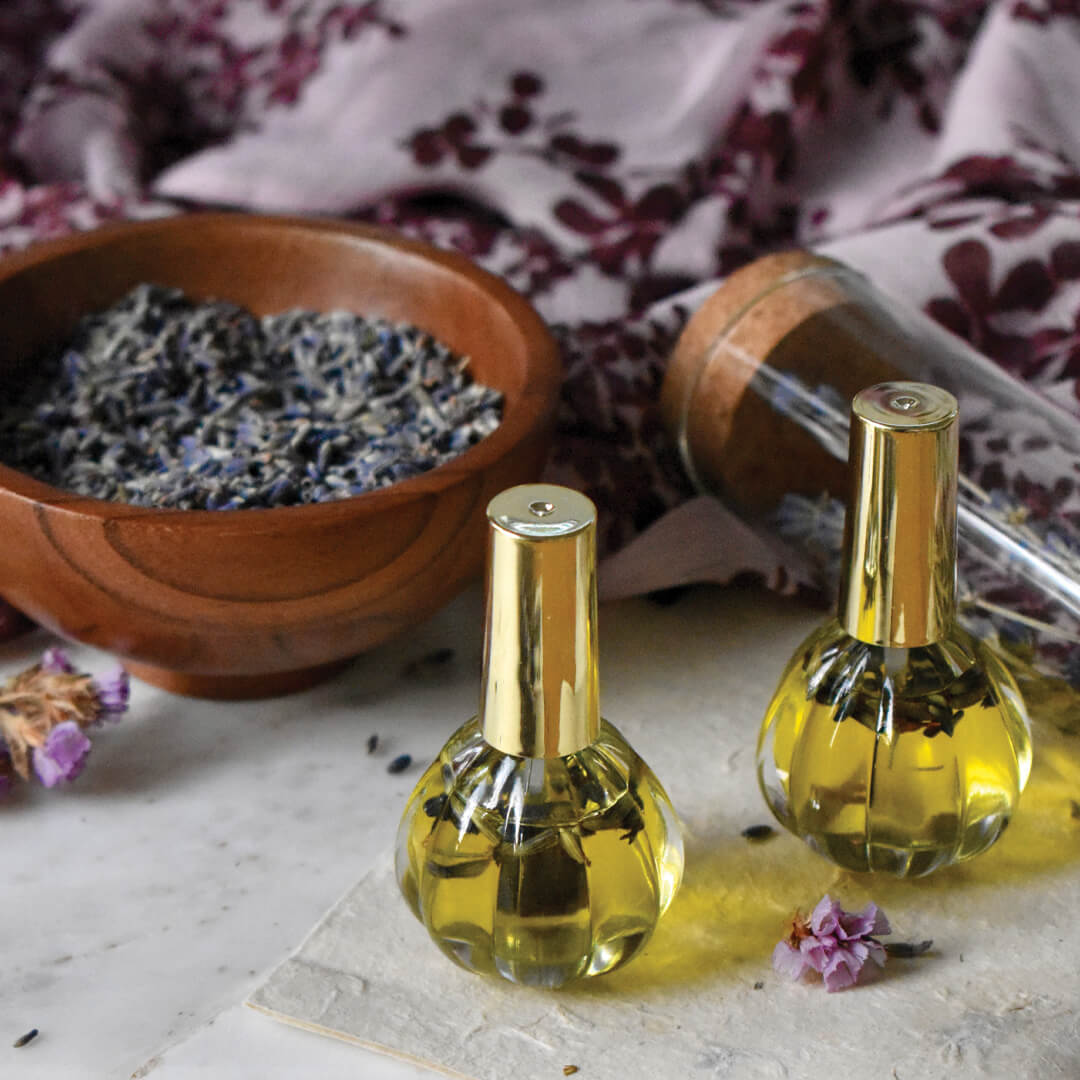
Lavender Cuticle Oil Recipe
by Kami McBride from Willow and Sage Spring 2025
You Will Need
- • Jar
- • 1 cup of jojoba oil
- • ¼ cup of dried lavender buds
- • Muslin cloth
- • 10–15 drops of vitamin E oil
- • 1 tsp. of castor oil
- • Spoon
- • Funnel: small
- • Nail polish bottles: empty & cleaned
To Make
In a clean, dry jar, combine the jojoba oil and dried lavender buds. Seal the jar tightly and place it in a warm, sunny spot. Allow the mixture to infuse for two to four weeks, giving it a gentle shake every few days to help release the lavender’s beneficial properties. After the infusion period, strain out the lavender buds through muslin cloth, leaving behind a beautifully infused lavender oil.
Once the oil has been strained, add the vitamin E oil and castor oil, and stir gently to combine. Using a small funnel, pour the lavender cuticle oil into empty nail polish bottles. Seal the bottles tightly. Shake before using, apply, and enjoy!
Discover more recipes with herbal infusions in our Willow and Sage magazine.
- Disclaimer/Safety Information
NOTE: Always test a small area of your skin, first, to check for sensitivity. Avoid contact with eyes and approach all ingredients with extreme caution if you have any skin sensitivity or allergies.
The information provided on flourish is not intended to diagnose, prevent, or treat any medical condition. Content is based on personal research and experiences and is meant for inspirational purposes only. We are not licensed nutritionists or medical professionals, and you should always consult with your doctor, particularly if you are pregnant or breastfeeding.









Give a Gift • Subscribe • Renew
Who We Are
Welcome to flourish, a haven for all things homemade bath and body.
By reading flourish, you’re not just taking care of your skin. You’re discovering the importance of loving your skin, and everything in-between. flourish is more than just a blog. It’s our way of encouraging everyone to thrive in a healthy and vigorous way – to empower wellness in all aspects of your day-to-day life.


thank you for sharing,
I will be making some