5 Natural Additives for Handmade Soap
1 Comment

Photo Credit: Johanna Love
Long before modern fragrance blends and colorants, soapmakers turned to the pantry, the garden, and the herb cupboard for ingredients that shaped the look, scent, and feel of a bar. These additions are rarely complicated. When used thoughtfully, they speak for themselves.
Oats for gentle Texture
Few ingredients appear in handmade soap as often as oats. Finely ground oatmeal, sometimes referred to as oat flour or colloidal oats, creates a soft, soothing bar suited for dry or sensitive skin.
When stirred into soap at trace, finely ground oats disperse evenly through the batter. They lend a faint cream color and a subtle, comforting feel when the bar is used. Whole oats or coarse flakes may also be sprinkled across the top of a loaf before cutting, though finer particles tend to perform better in daily use.
Honey and Milk for Creamy Lather
Honey provides natural sugars that can produce a fuller, creamier lather. Only a small amount is needed. Added at light trace, it dissolves into the batter and gives the finished bar a gentle warmth in both color and scent.
Milk introduces a different quality. Whether from goats, cows, or plants such as oats or coconut, milk adds sugars and fats that soften the feel of the lather. Many soapmakers freeze the milk before mixing it with lye to prevent scorching and preserve its pale color.
Coffee and Tea for Depth and Character
Coffee has long been used in soapmaking, both for its scent and its practical qualities. Brewed coffee can replace part or all of the water in a recipe, lending a deep tone to the finished bar.
Tea offers a quieter variation on the same idea. Strong infusions of chamomile, green tea, or black tea can be used as the liquid portion of the soap. The result is subtle. The color may shift slightly, and the finished bar carries a faint botanical note.
Herbs and Botanicals from the garden
Herbs can take several forms when used in soap. Some are infused into oils beforehand, allowing the plant’s qualities to move gently into the base oils. Others are added directly as dried petals or finely ground powders.
Calendula petals are a familiar example. Their golden color holds surprisingly well in soap and adds warmth to a bar. Lavender buds may be used sparingly for scent and texture. Rosemary, mint, chamomile, and rose petals are also common. These ingredients rarely dominate the soap. Instead, they leave small visual and aromatic reminders of the garden.
Spices for Warmth and Natural Color
The spice rack offers another set of ingredients that appear frequently in handmade soap. Cinnamon, turmeric, cocoa powder, and ground cardamom can each shift the tone of a soap without relying on synthetic colorants.
Turmeric produces a warm golden hue. Cocoa powder deepens a bar to shades of brown. Cinnamon or cardamom adds a gentle spice note that pairs well with coffee or honey-based soaps. A small quantity often achieves the desired effect without overwhelming the soap or irritating the skin.

10-Minute Floral Soap
by Holly Brandenberger from Willow and Sage Spring 2025
You Will Need
- • Double boiler/Saucepan
- • ½ lb. goat’s milk soap base
- • ½ lb. glycerin soap base
- • Dried calendula
- • 40–70 drops essential oils of choice
- • Silicone molds: rectangle
- • Spray bottle w/ 99% isopropyl alcohol
- • Dried herbs & flowers
To Make
In a double boiler or saucepan, melt the soap base on low heat. Once melted, add a little dried calendula for coloring and texture. Remove from the heat. Add the essential oils and stir to combine. Pour the soap batter into the molds. Spray the top with 99% isopropyl alcohol to remove any air bubbles. Let dry for 5–10 minutes, and add the floral elements to the top. Let it sit for 24 hours, remove from the molds, and use.
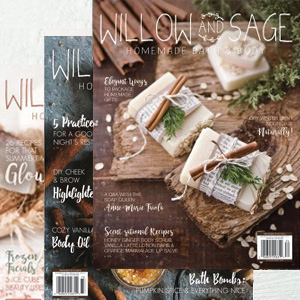
Explore more soap recipes in our newest issue of Willow and Sage.









Give a Gift • Subscribe • Renew
Who We Are
Welcome to flourish, a haven for all things homemade bath and body.
By reading flourish, you’re not just taking care of your skin. You’re discovering the importance of loving your skin, and everything in-between. flourish is more than just a blog. It’s our way of encouraging everyone to thrive in a healthy and vigorous way – to empower wellness in all aspects of your day-to-day life.


Whenever I try to get to your page flourish it comes back with a message that says “this page seems to be missing.” Why? Please send me a link to my email if you would at [email protected]